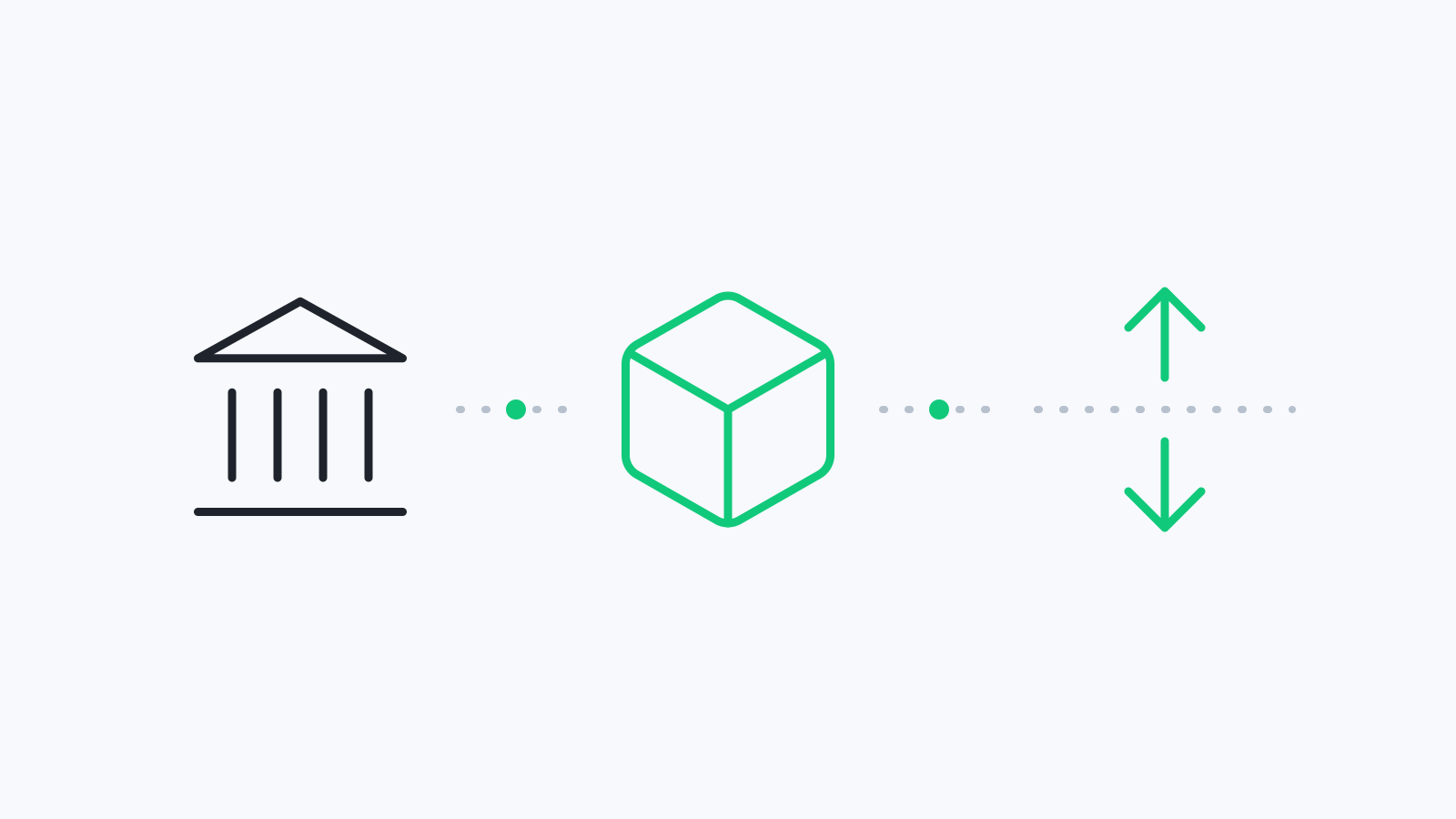
Tokenized stocks vs. CFDs vs. perpetuals
What is the difference between tokenized stocks, CFDs, and perpetuals?
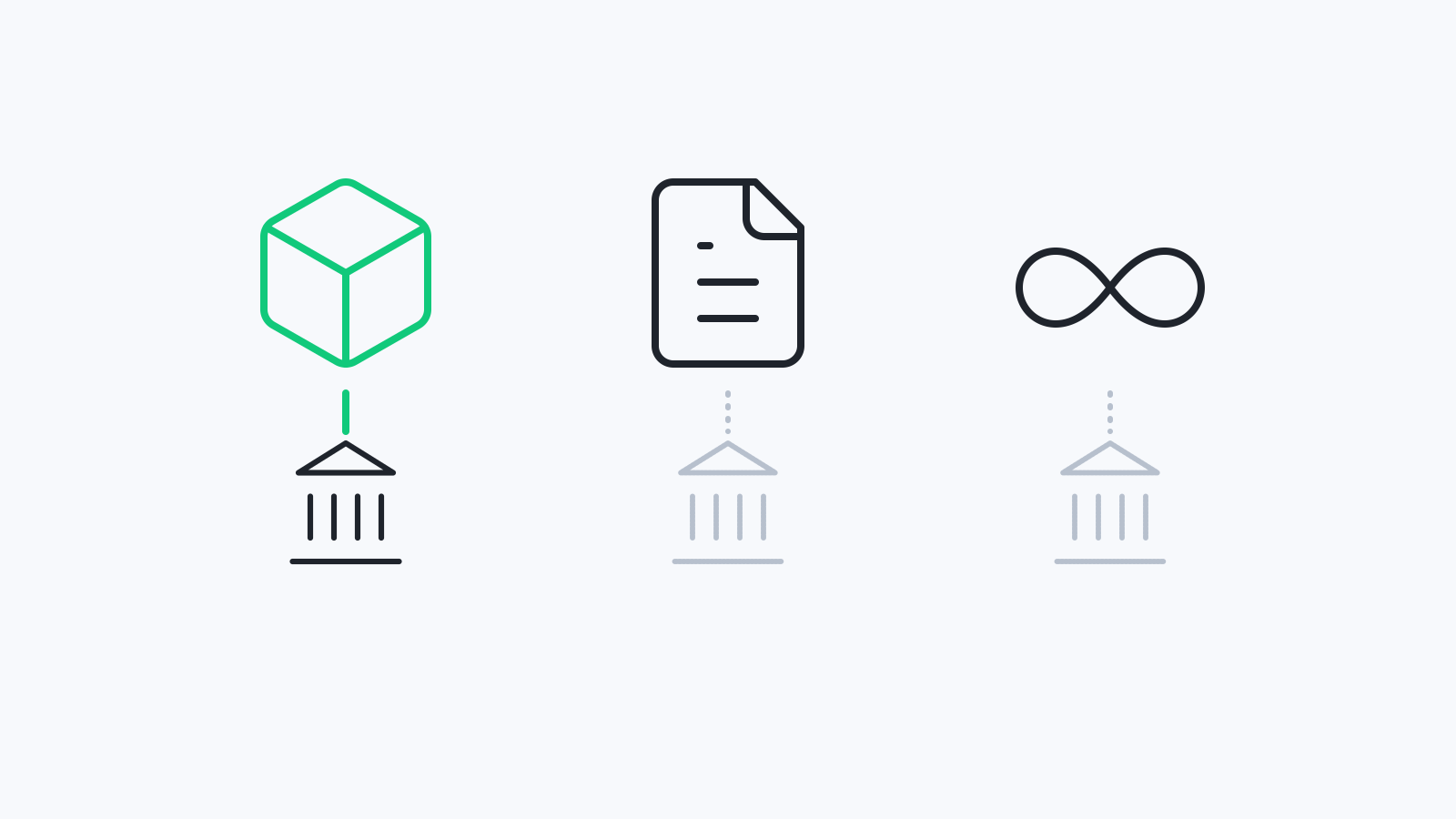
A tokenized stock is backed by an actual share held in custody; a contract for difference (CFD) and a perpetual future are derivatives that track the price without any share behind them. In short, all three give exposure to the price of a stock such as Apple, but only one involves a real share.
Almost every practical difference follows from that split.
Ownership, dividends, leverage, how a position is financed, and who the counterparty is all diverge depending on whether a real asset sits behind the exposure.
Tokenized stocks: backed by a real share
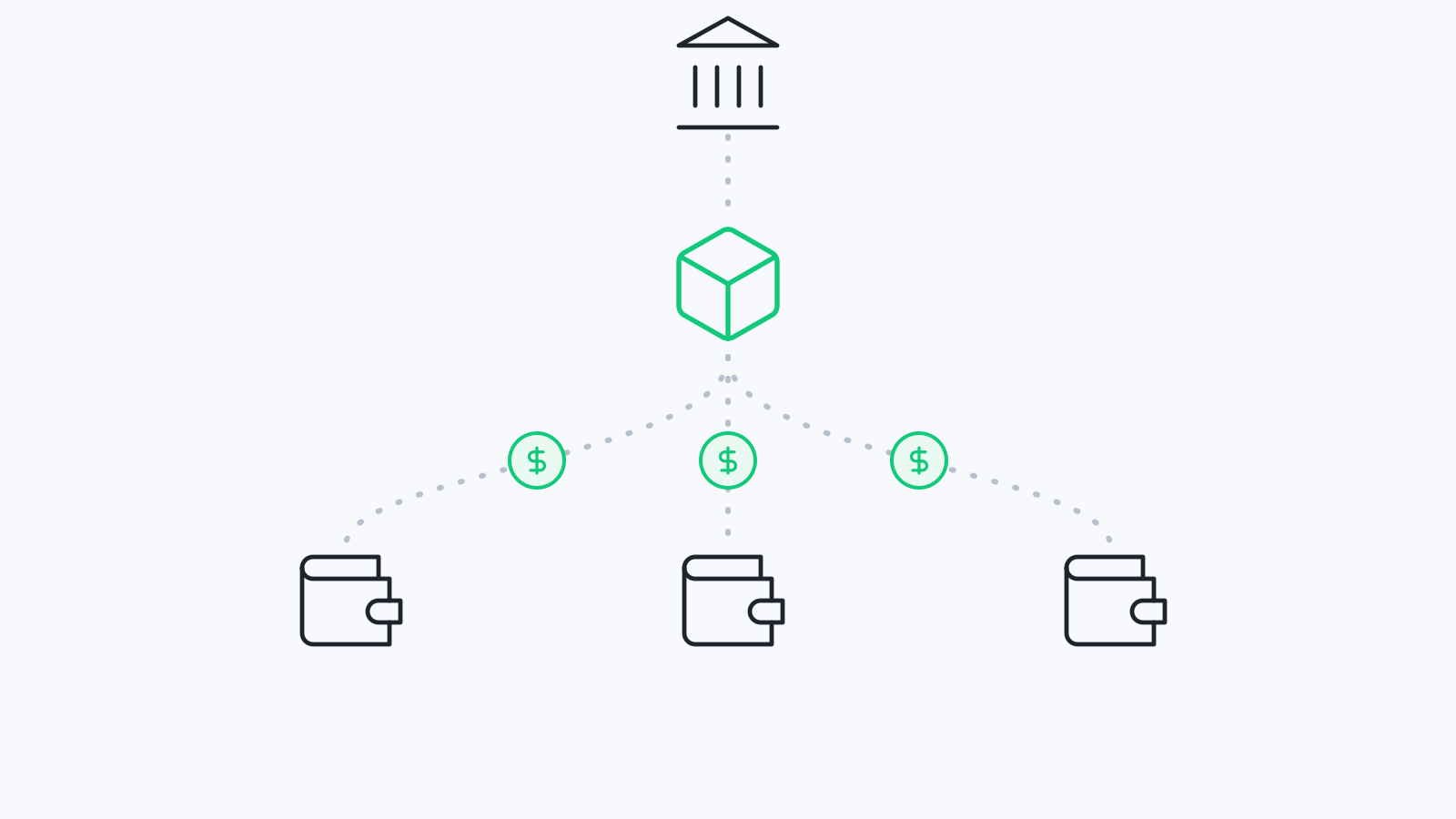
A tokenized stock is a blockchain token backed by a real share held 1:1 at a custodian. It is a spot instrument: one token corresponds to a defined amount of the underlying, with no leverage built in. What a holder legally holds (a direct claim on the share, a debt instrument referencing it, or a claim on a holding vehicle) depends on the issuer, but a real share sits behind the token in each case.
Since a real share sits behind it, a tokenized stock can pass through dividends, may be redeemable for the underlying value under the issuer's terms, and can be held in a self-custodied wallet and used across on-chain applications.
The trade-offs are custody and issuer risk, and a price that can drift from the underlying when liquidity is thin. For the full picture, see What are tokenized stocks?.
CFDs: leveraged price exposure through a broker
A CFD ("Contract-For-Difference) is an agreement with a broker to exchange the difference in an asset's price between opening and closing a position. No share changes hands and nothing settles on-chain; the position is cash-settled against the broker, usually with leverage.
CFDs are an off-chain product offered by regulated brokers and require a brokerage account. Positions can be held open without an expiry date, but leverage means a financing charge accrues on positions held overnight, and losses can exceed the initial margin unless a protection is set. With CFDs, the broker is frequently the same trade counterparty.
Perpetual futures: leveraged price exposure on an exchange
A perpetual future (commonly referred to "perp") is a derivative contract that tracks an underlying price, with no expiry date. To keep the price aligned with the underlying place, it relies on a funding rate.
Like a CFD, perpetual products involve no underlying share and settles in cash (or stablecoins for blockchain-based trading venues) and are often used with leverage, which can be much higher than a CFD typicaly allows.
Perpetual instruments trade on centralized exchanges and, increasingly, on-chain protocols.
On-chain versions can be non-custodial and permissionless; centralized ones require an exchange account.
The dominant risk of such products is liquidation: when leverage is high and the price moves against a position past its margin, the position is closed automatically.
How the three compare
| Tokenized stock | CFD | Perpetual future | |
|---|---|---|---|
| What it is | Spot token, asset-backed | Broker contract, derivative | Exchange contract, derivative |
| Real share held? | Yes, in custody | No | No |
| Ownership claim | Economic claim on a share | None | None |
| Leverage | None (spot) | Yes, capped for retail in some regions | Yes, often high |
| Position financing | None | Overnight financing charge | Funding rate between traders |
| Counterparty | Issuer and custodian | The broker | Exchange or on-chain protocol |
| Where it trades | On-chain | Off-chain, broker account | Exchange or on-chain |
| Dividends | Passed through (varies) | Cash adjustment | Generally none |
| Availability | Often non-US only | Not available to US retail | Largely offshore or on-chain |
Ownership, dividends, and entitlements
A tokenized stock is backed by a share that actually exists in custody, giving the holder a claim tied to a real underlying asset; a CFD and a perpetual instrument carry no claim on anything besides the contract itself. Their exposure is not an obligation of the company whose price it tracks, and it confers none of the rights that come with holding the underlying.
Dividends follow the same logic. A tokenized stock can pass a dividend through to holders, by accumulation or distribution, since a real share held at a custodian received it. In constrast, a CFD provider applies a cash dividend adjustment, crediting long positions and debiting short ones by an amount approximating the payout. A perpetual generally passes nothing through; how the ex-dividend price drop is reflected depends on the contract's reference price and funding design.
Finally, voting rights are usually absent across all three, though some tokenized-stock issuers have begun considering the introduction of proxy voting.
Leverage, financing, and counterparty
The two derivatives products are primarily built for leverage but the tokenized stock is not.
A spot token can fall to zero only if the underlying does; a leveraged position can be liquidated on a move that a spot holder would simply ride out.
The financing mechanisms differ in a way that matters for anyone holding beyond a day.
A CFD instrument charges overnight financing that reflects the cost of the leverage the broker extends, a recurring drag on the position.
A perpetual product uses a funding rate exchanged directly between longs and shorts to hold the contract near the underlying; depending on which side is crowded, that funding can be a cost (or, occasionally, a credit). Counterparty structure differs too: the tokenized stock depends on an issuer and custodian, the CFD on a single broker that may also be taking the other side, and the perpetual product on an exchange or on-chain protocol and its liquidation engine.
Availability
Access to these instruments depends as much on where a person is as on which instrument they prefer.
Many tokenized stock products are offered only to investors outside the United States. CFDs are not available to US retail investors and are offered mainly through brokers in regions such as the EU, UK, and Australia. Perpetual products are dominant by trading volume but largely offshore or on-chain, with access commonly restricted for US persons.
Key takeaways
The three instruments answer different questions. A tokenized stock is for holding an asset with a real claim behind it; a CFD and a perpetual are for trading price direction with leverage, off-chain through a broker or on an exchange respectively.
To summarize, there are four points to consider when comparing CFDs, perpetual instruments, and tokenized stocks:
- Ownership - Only the tokenized stock is backed by a real share; the other two are derivatives with no claim on the company.
- Leverage and financing - Spot tokens carry no leverage (nor financing costs). CFDs add overnight financing, perpetuals a funding rate, and both introduce a liquidation risk.
- Counterparty - Issuer and custodian for the token, a single broker for the CFD, an exchange or protocol for the perp.
- Access - Tokenized products are often restricted to non-US customers, CFDs are not available to US retail participants, and perpetual futures are largely offshore or exist on-chain (but come with geographical restrictions).
Follow Asortino on X for tokenized assets updates.
Follow us on XThis article is provided for informational and educational purposes only. It is not financial, investment, legal, or tax advice, and nothing in it constitutes an endorsement or recommendation of any asset, issuer, product, or strategy. Tokenized stocks carry risk, including the possible loss of capital. Always do your own research and consider consulting a licensed professional before making any investment decision.