What are tokenized ETFs?

What is a tokenized ETF?
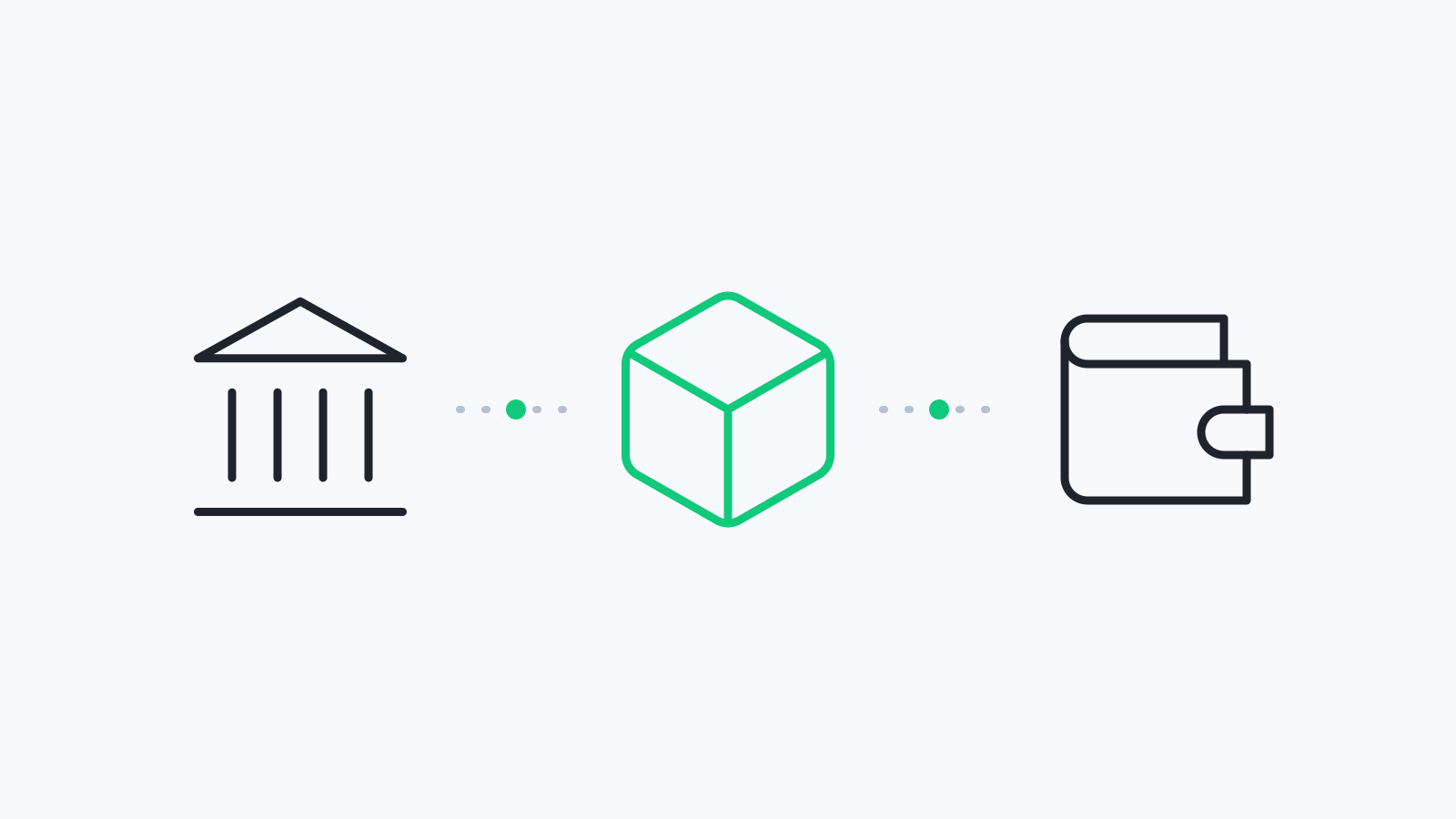
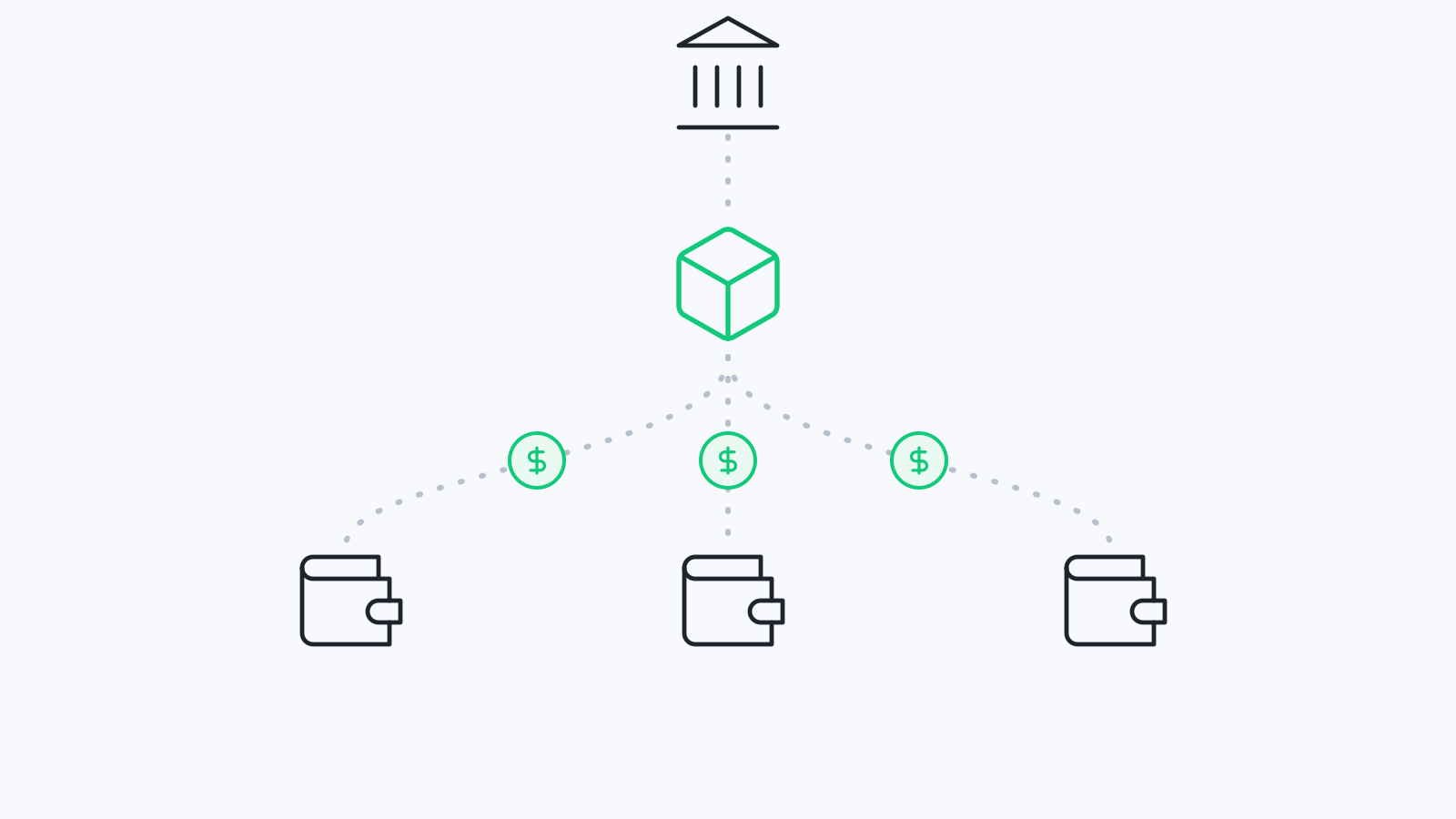
A tokenized ETF is a representation of an exchange-traded fund ("ETF") share on the blockchain, giving investors exposure to the fund's price movements. The investor holds the token in a blockchain wallet, while a regulated entity holds the actual fund share backing it at a custodian.
The defining feature is that a tokenized ETF carries two layers of exposure rather than one: the token tracks a fund share, and the fund share itself holds a basket of underlying securities. Understanding both layers is what separates a tokenized ETF from a tokenized stock.
ETFs have become one of the main vehicles for passive exposure to an asset class or market segment, generally favored over traditional mutual funds for their lower fees and intraday tradability. Tokenization extends that exposure to a blockchain wallet, in the same way it does for individual equities.
How do tokenized ETFs differ from tokenized stocks?
Mechanically, tokenized ETFs and tokenized stocks are nearly identical. The difference lies entirely in the underlying, and therefore in how ETFs differ from stocks in the first place. A stock is a fractional ownership stake in a single company; an ETF is a fund holding a diversified basket of assets. Three distinctions follow from this:
- Diversification - A stock's value depends on one company's performance. An ETF holds many underlying assets (equities, bonds, or commodities such as gold), so its value reflects the basket as a whole.
- Valuation - A stock's price is set directly by supply and demand for that single asset. An ETF's price is anchored to the combined value of its holdings, known as the net asset value (NAV), kept in line through a creation-and-redemption process.
- Cost - A stock carries no ongoing holding cost. An ETF charges a recurring annual fee, the expense ratio, deducted from the fund's assets to cover management.
What do investors actually own?
As with a tokenized stock, holding a tokenized ETF does not confer direct ownership of the underlying securities. The claim is layered:
- The token - An on-chain claim representing a defined number of fund shares.
- The fund share - That claim resolves to shares of the ETF, held in custody by a regulated institution.
- The basket - The fund share is itself a proportional claim on the underlying basket, so dividends and interest paid by those assets accrue to the fund.
Voting rights for the companies inside the fund remain with the ETF provider (e.g., Vanguard, State Street), not the token holder.
As with tokenized stocks, what a holder receives in practice (distribution treatment, redemption rights) is defined by each issuer's terms.
How do tokenized ETFs track the underlying price?
A tokenized ETF relies on two stacked mechanisms to stay aligned with the value of its underlying basket.
-
The fund layer - The listed ETF stays close to its NAV through the traditional creation-and-redemption process, in which authorized participants exchange baskets of the underlying securities for fund shares (and the reverse). This keeps the fund share priced near the value of what it holds, and operates entirely in traditional markets.
-
The token layer - The issuer holds ETF shares with a custodian and mints a matching number of tokens. If the token trades away from the fund-share price, minting or redeeming becomes profitable, and the resulting arbitrage pulls the token back toward the share, the same loop described for tokenized stocks.
The risk of tracking error
Because two layers sit between the token and the basket, a tokenized ETF can diverge from the NAV it is meant to represent, a divergence known as tracking error. Common contributors include thin on-chain liquidity, which lets the token price drift from the fund share; latency in the arbitrage loop, since the underlying market settles on its own schedule rather than instantly; and disruptions to on-chain minting or redemption. Passive funds tracking a broad index are generally expected to show low tracking error, but the tokenized wrapper can introduce its own, separate from the fund's.
What is an expense ratio (TER), and who pays it?
The total expense ratio (TER) is the fund manager's recurring fee, covering operational and administrative costs.
Token holders do not pay it directly. The fee is deducted continuously from the fund's assets on a pro-rata basis, so the NAV declines by roughly the TER over the course of a year, and the token's market value reflects that ongoing deduction. The cost is real but embedded, not specific to the tokenized component of the product.
How are ETF distributions handled?
Distributions on a tokenized ETF are shaped at two levels, which is what makes them distinct from a single stock's dividend.
At the fund level, an ETF is structured as either distributing (paying income out to shareholders) or accumulating (reinvesting it inside the fund). At the token level, the issuer then applies its own treatment (accumulation via a rising multiplier, or distribution to holders) to whatever the fund passes through. The combination of the two determines what a token holder ultimately receives.
What types of ETFs are available as tokens?
The tokenized ETF universe is narrower than the traditional one, but it spans several familiar categories: broad-market index funds (such as S&P 500 trackers), sector and thematic funds, and fixed-income funds holding bonds or short-term treasuries. A handful of leveraged and inverse products (such as Direxion funds) are also tokenized, though these amplify risk and are built for short-term trading rather than buy-and-hold exposure. Availability depends on which issuers have chosen to wrap a given fund, so the on-chain selection reflects issuer priorities more than the full breadth of the ETF market.
Where can tokenized ETFs be found?
Asortino curates the largest tokenized ETF providers and maintains an up-to-date database of contract addresses across chains.
AsortinoBrowse every tokenized ETFEach asset page lists live contract addresses across chains and direct links to each issuer's page.Explore tokenized ETFsFor instance, the iShares Core MSCI Emerging Markets ETF is tokenized by more than one issuer (on more than one chain):
 iShares Core MSCI Emerging Markets ETFIEMGView asset


 Core MSCI Emerging Markets xStockIEMGx
 Backed Finance·Solana
Who are the tokenized ETF issuers?
Not every tokenized-stock issuer offers ETF products. As of June 2026, tokenized ETFs on Asortino are issued by Backed Finance, Ondo, and Dinari, with Shift RWA covering the leveraged and inverse products (such as Direxion funds). For full issuer profiles (custody, dividend handling, and regulatory standing), see the issuer list in What are tokenized stocks?.
What are the risks of tokenized ETFs?
Tokenized ETFs carry the same three core risks as tokenized stocks (technology, counterparty, and liquidity & redemption), described in full in What are tokenized stocks?. The fund structure adds two considerations on top:
- Tracking error - The token can diverge from the fund's NAV for the reasons above, a risk absent from a token tracking a single share.
- An additional custody layer - Exposure runs through the fund and its holdings as well as the issuer and custodian, lengthening the chain of institutions the backing depends on.
Key takeaways
Tokenized ETFs bring a familiar instrument (diversified, low-cost fund exposure) onto the blockchain, reachable from a wallet rather than a brokerage account. The trade-off is added structure: two layers sit between the token and the assets it represents, and each one introduces its own considerations.
Before any tokenized ETF is acquired, four questions are worth resolving:
- Underlying fund - Which ETF does the token track, and what does that fund hold?
- Expense ratio - What is the fund's TER, and how does it erode value over time?
- Distributions - How are income and dividends treated at both the fund and token levels?
- Liquidity - How deep is on-chain liquidity, and how wide is the gap to NAV?
Follow Asortino on X for tokenized assets updates.
Follow us on XThis article is provided for informational and educational purposes only. It is not financial, investment, legal, or tax advice, and nothing in it constitutes an endorsement or recommendation of any asset, issuer, product, or strategy. Tokenized stocks carry risk, including the possible loss of capital. Always do your own research and consider consulting a licensed professional before making any investment decision.