What are tokenized stocks?
What is a tokenized stock?
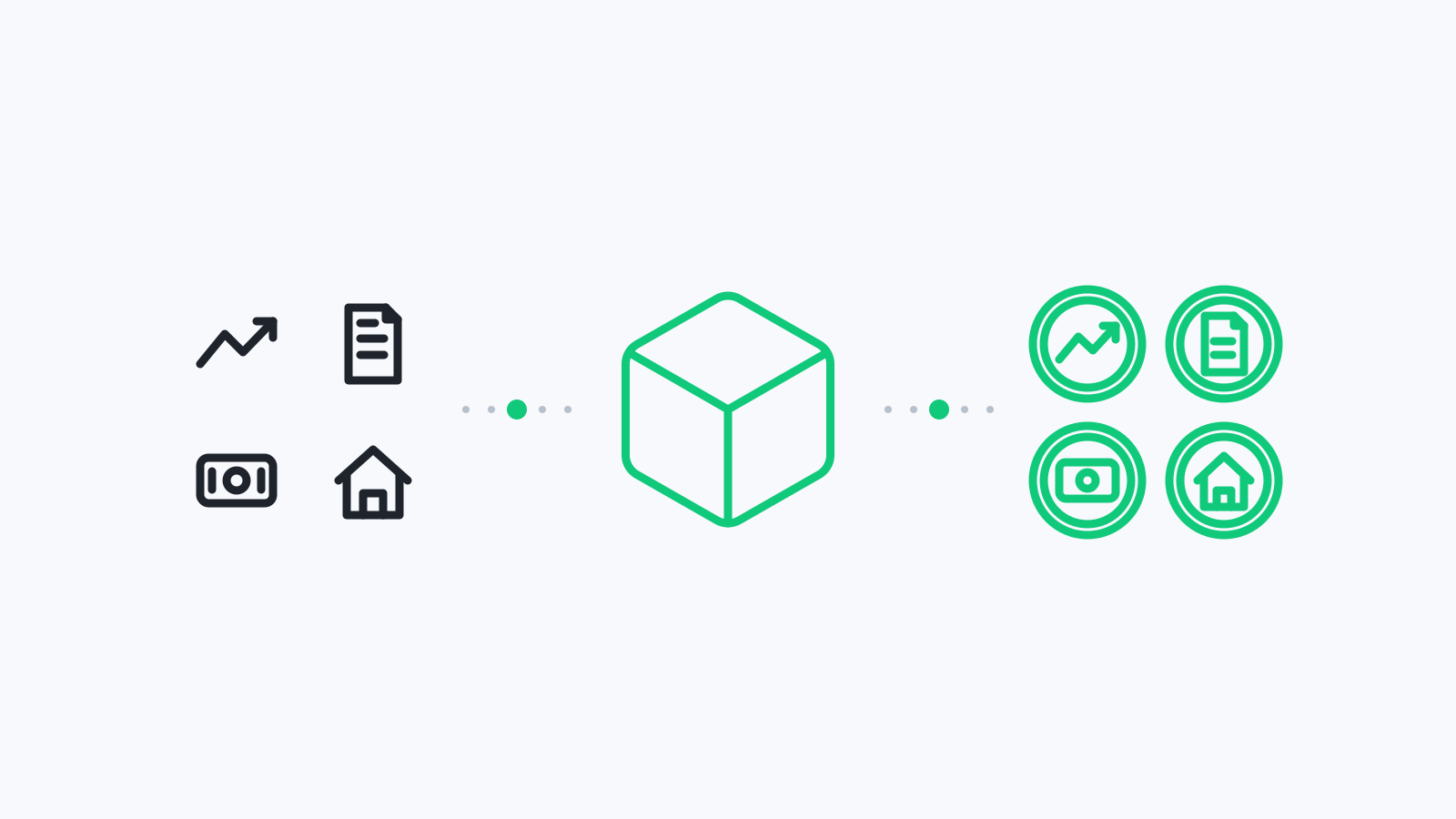
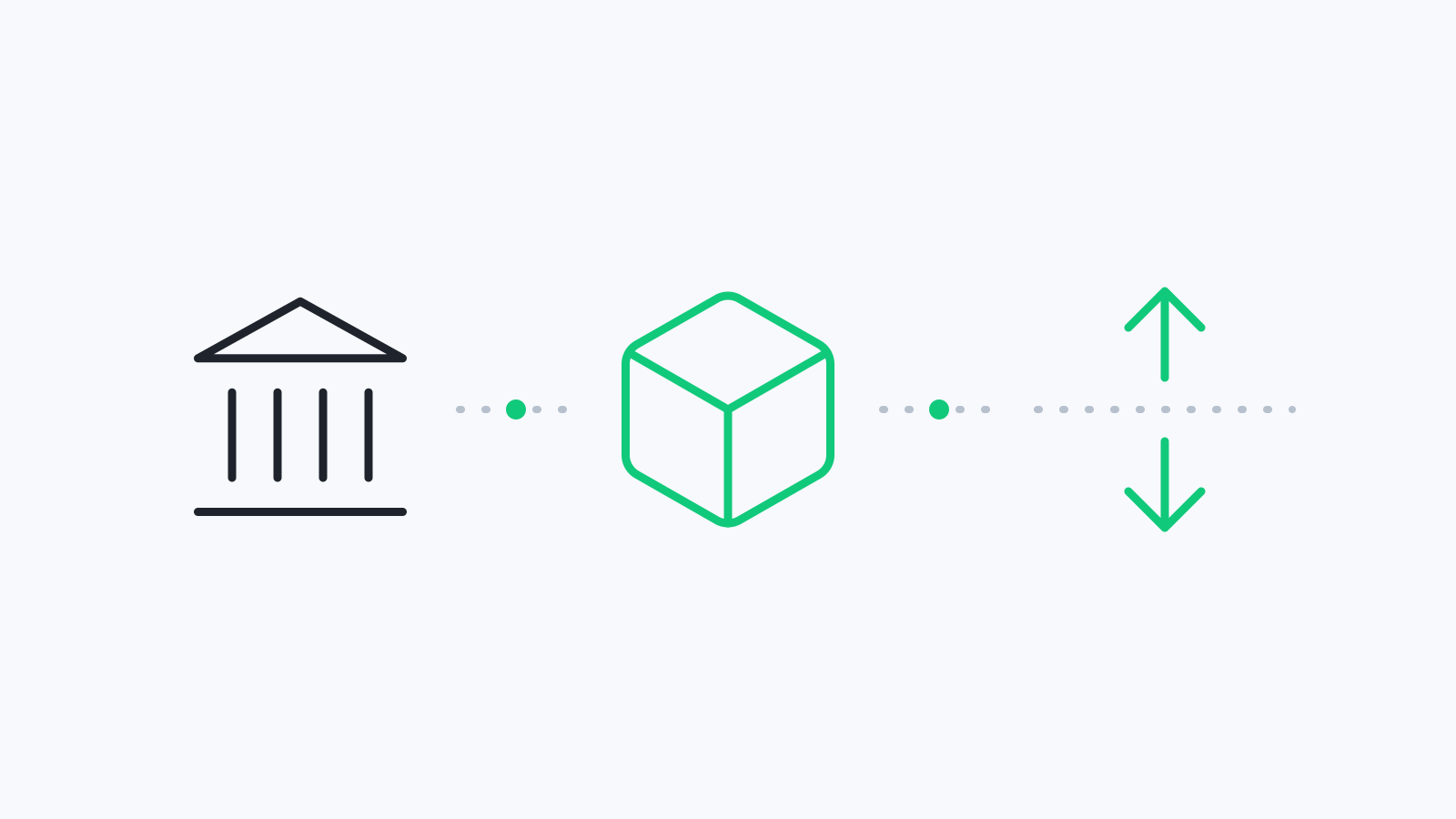
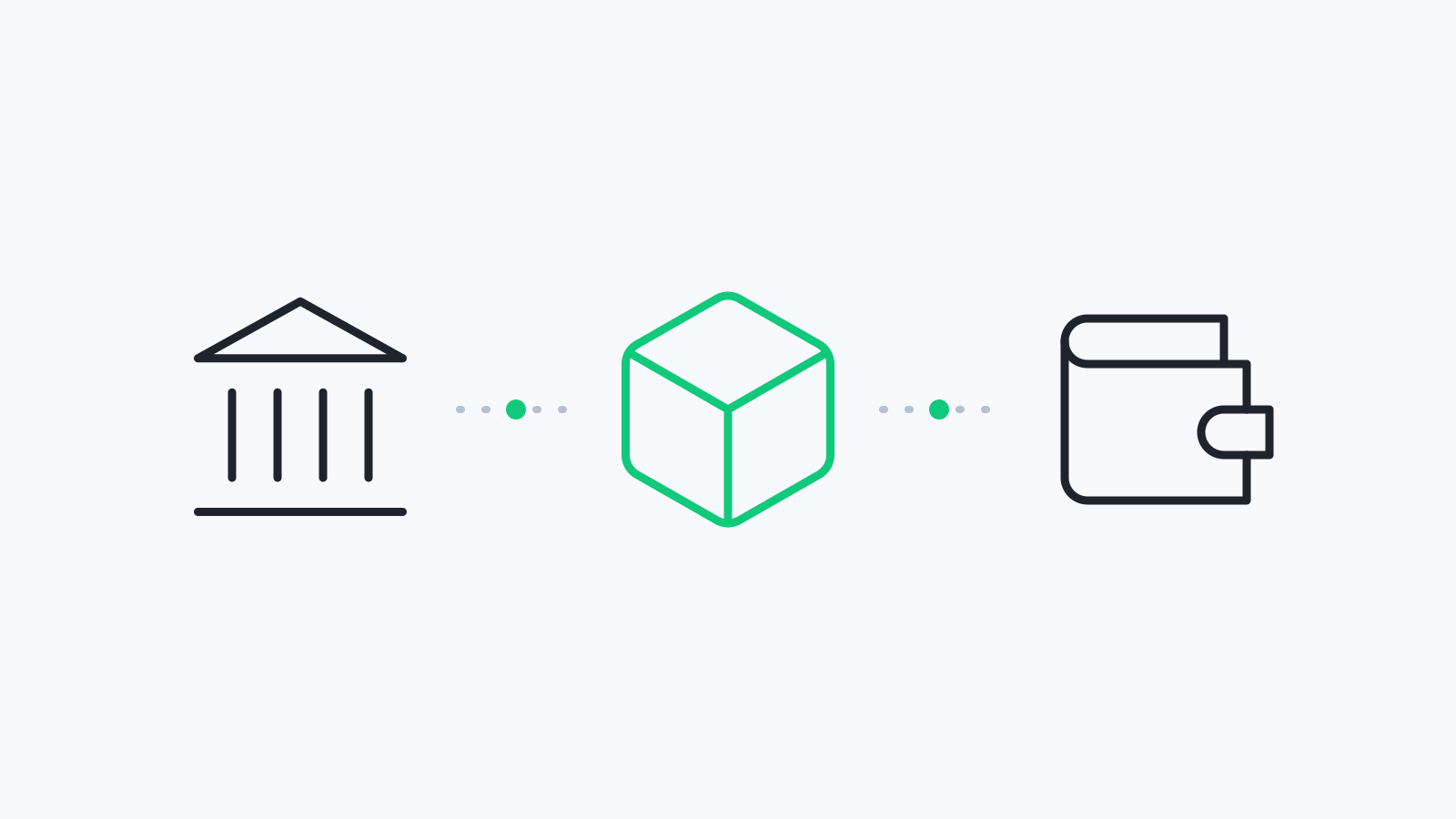
A tokenized stock is a representation of a company share on the blockchain, giving investors exposure to its price movements. The investor holds the token in a blockchain wallet, while a regulated entity holds the actual equity backing it at a custodian.
Tokenized stocks are one of many tokenized assets that exist on public blockchains.
They offer benefits such as 24/7 availability, fast settlement, and composability with blockchain-based decentralized applications ("dApps"). Each benefit, however, must be weighed against a corresponding risk: technology risk (e.g., smart contract failures), liquidity risk, and counterparty risk (e.g., custodians and issuers).
Why do tokenized stocks exist?
Investors can already buy equity shares through a broker, which raises a reasonable question: what does a tokenized representation add?
In practice, tokenized stocks extend three properties to real-world equities that crypto users already expect:
- Around-the-clock trading - Because the token lives on-chain, it can trade outside standard exchange hours, opening trading windows that traditional markets do not.
- Accessibility - A blockchain wallet is sufficient to hold tokenized stocks; no brokerage account is required, and fractional ownership becomes the norm. Transfers settle near-instantly.
- Composability - Tokenized stocks can be integrated into blockchain applications, as other crypto assets are.
What do investors actually own?
A tokenized stock represents an economic claim on a share, not the registered share itself. Voting rights and direct registry ownership usually remain with the custodian holding the real shares, and tokenized stock holders are generally not eligible to vote.
What a holder receives in practice (dividend treatment, redemption rights, the outcome of a merger or delisting) is defined by each issuer's terms, and the specifics differ from one product and issuer to the next.
How do tokenized stocks track the underlying stock price?
Two distinct mechanisms keep a tokenized stock aligned with its underlying. One holds the price close: open issuance and redemption. The other keeps the economic claim correct as the underlying changes: dividend and corporate-action processing.
-
Issuance and redemption at fair market value - Authorized parties can create new tokens by delivering shares into custody, or redeem them by releasing the underlying value back out. When the token drifts above or below the share price, that gap makes minting or redeeming profitable, and the resulting arbitrage pulls the price back toward the underlying, the same loop that keeps ETF prices near their net asset value. It only works, however, while both the issuance window and the underlying market are open. Outside standard exchange hours the share cannot be traded or hedged, so arbitrage stalls and the token may trade at a premium or discount. This is the main caveat behind the "24/7 trading" benefit, and it ties directly to the liquidity risk.
-
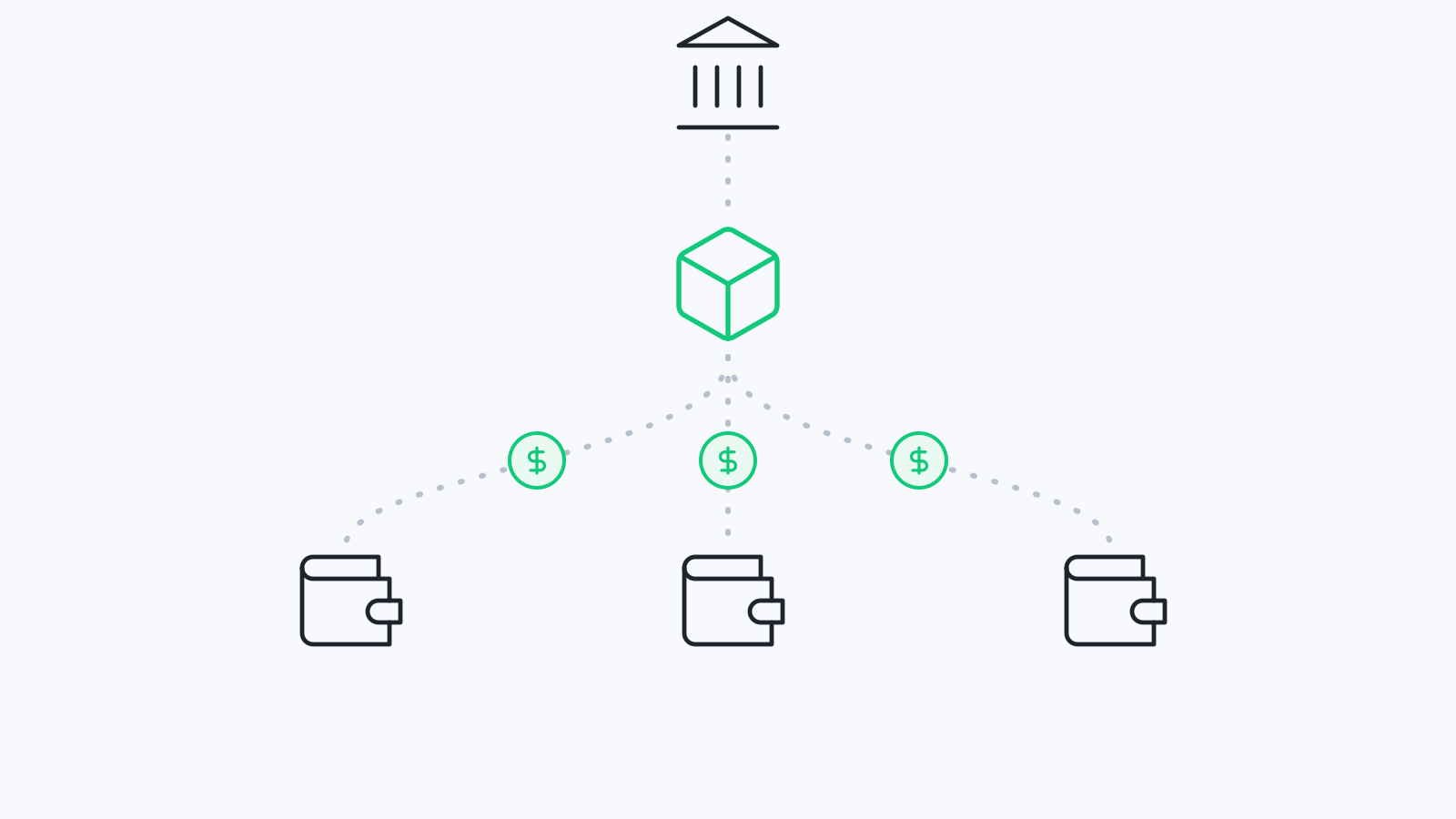
Dividend distribution - When the underlying pays a dividend, its share price typically drops by roughly the dividend amount on the ex-date. To keep the token faithful, the issuer passes that value to holders, usually by reinvesting it into the position, occasionally by distributing it.
-
Splits and corporate actions - Splits, reverse splits, mergers, spin-offs, and ticker changes all alter what a single share represents. To keep the token accurate, the issuer adjusts the token-to-share ratio (the "multiplier") so each token still maps to the correct claim. A 10-for-1 split, for instance, leaves a holder with the same tokens, each now backed by ten times as many shares; depending on the issuer's design, the holder may instead receive proportionally more tokens. These adjustments are made on-chain by a central administrator, though the exact mechanism differs by issuer. More complex actions such as mergers or delistings may instead trigger conversion or forced redemption under the issuer's terms.
How are dividends managed?
Stocks often pay dividends on a regular schedule (quarterly, semi-annual, or annual).
A tokenized product can pass a dividend to holders in two broad ways. Accumulation is the standard approach; distribution is the less common alternative.
- Accumulation (also called reinvestment) - The issuer raises the token's share ratio (often called a multiplier or rebasing scalar) so that, after the dividend, each token represents slightly more of the underlying. No cash leaves the structure; the value compounds inside the token.
- Distribution - Holders receive a payout, usually in a stablecoin, proportional to the tokens held at the ex-date snapshot.
Where can tokenized stocks be found?
Asortino curates the largest tokenized stock (and ETF) providers and maintains an up-to-date database of contract addresses for the largest tokenized stock products.
AsortinoBrowse every tokenized stockEach asset page lists live contract addresses across chains and direct links to each issuer's page.Explore tokenized stocksWhich blockchains host tokenized stocks?
Tokenized stocks are issued across a variety of blockchains, though most activity today sits on a handful of networks. The most prominent are:
- Ethereum - The oldest chain for real-world assets, generally favored for higher-value and institutional issuance.
- Solana - High throughput and low fees, home to a large share of tokenized-stock trading volume.
- BNB Chain - A lower-cost EVM alternative used by several issuers for retail distribution.
The same product is often deployed across more than one chain. Issuers typically keep these multi-chain versions in sync with a burn-and-mint bridge; the total supply across all chains must match the number of shares held by the custodian.
For instance, the same Apple tokenized stock can be offered by two issuers across two different chains.
 AppleAAPLView asset
 Apple xStockAAPLx
 Backed Finance·Solana


Who are the tokenized stock issuers?
As of June 2026, the tokenized stock issuers listed on Asortino are:
- Backed Finance (xStocks) - A Switzerland-based issuer whose xStocks line is among the most widely distributed, using a reinvesting multiplier model for dividends.
- Ondo (Global Markets tokens) - An issuer of tokenized equities and funds whose products are among the most widely distributed.
- Dinari (dShares) - A US-based broker-dealer company registered with the SEC as a Transfer Agent.
- Binance (bStocks) - Tokenized securities launched by Binance that provide 1:1 asset-backed on-chain exposure to traditional US equities and ETFs. Issued under a regulated prospectus approved by the Financial Services Regulatory Authority (FSRA) of the Abu Dhabi Global Market (ADGM).
- st0x - A newer issuer focused on a single chain (Base) that operates under an approved Liechtenstein FMA EU Base Prospectus, offering 1:1 collateralized tokenized public equities as regulated debt instruments.
Each issuer makes distinct choices about custody, dividend handling, corporate actions, and issuance & redemption.
What are the risks of tokenized stocks?
The benefits above are accompanied by several risks that warrant full understanding before any tokenized stock is acquired. The most prominent are:
- Technology risk - Tokenized stocks exist as smart contracts on EVM blockchains (e.g., Ethereum, BNB Chain) or as programs on Solana. As they are increasingly integrated into dApps (e.g., DeFi lending protocols), the attack surface for bugs, exploits, and cascading failures grows, any of which could cause losses for market participants.
- Counterparty risk - This covers both the issuer and the custodian(s) holding the underlying assets that collateralize the tokens. If the custodian fails, the shares are mishandled, or the issuer cannot honor redemptions, the token's backing is only as sound as those institutions.
- Liquidity and redemption risk - Because tokenized stocks trade on secondary markets and outside traditional hours, liquidity can be thin when the underlying market (e.g., NYSE) is closed, and large trades can move the price more than expected. As noted earlier, this is also when the token is most likely to drift to a premium or discount. Redemption at the issuer may carry fees and conditions worth understanding before acquisition.
Key takeaways
Tokenized stocks are a fast-developing market, with new providers and assets launching almost every week. They make equity exposure easier to reach: a wallet in place of a brokerage account, fractional sizes by default, near-instant transfers, and trading outside standard exchange hours.
That convenience rests on three components (a smart contract, an issuer, and a custodian holding the actual shares), and the protections available depend on each one. Before any tokenized stock is acquired, three questions are worth resolving:
- Custody - Who holds the underlying asset, and under what regulatory standing?
- Distributions - How are dividends and corporate actions processed and passed to token holders?
- Issuance and redemption - How does the create/redeem process work in practice, including fees and conditions?
Follow Asortino on X for tokenized assets updates.
Follow us on XThis article is provided for informational and educational purposes only. It is not financial, investment, legal, or tax advice, and nothing in it constitutes an endorsement or recommendation of any asset, issuer, product, or strategy. Tokenized stocks carry risk, including the possible loss of capital. Always do your own research and consider consulting a licensed professional before making any investment decision.